Raising Future Voters - Teaching Children About Democracy
Updated: 4 days ago

Across America, study after study tells the same story: young people are losing faith in the democratic process. They are growing up skeptical that their voices matter, doubtful that their votes make a difference, and uncertain whether the system designed to serve them ever truly will. As parents, grandparents, and guardians, this should stop us cold. We want to raise the future of this country to believe in the power of democracy.
What We're Facing
Voter participation among young Americans has long trailed that of older generations, but the more alarming trend is not simply who shows up at the polls — it is who believes showing up matters at all. Surveys of teenagers and young adults consistently reveal that a significant portion feel that elections are decided by powerful interests beyond their reach, that political institutions do not reflect their values, and that civic participation is, at best, a symbolic gesture.
This erosion of trust does not appear out of nowhere. Children absorb the world around them. A child who grows up believing their vote does not matter will become an adult who never casts one. The stakes, then, are not just personal. They are generational.
Patriotism as Practice, Not Sentiment
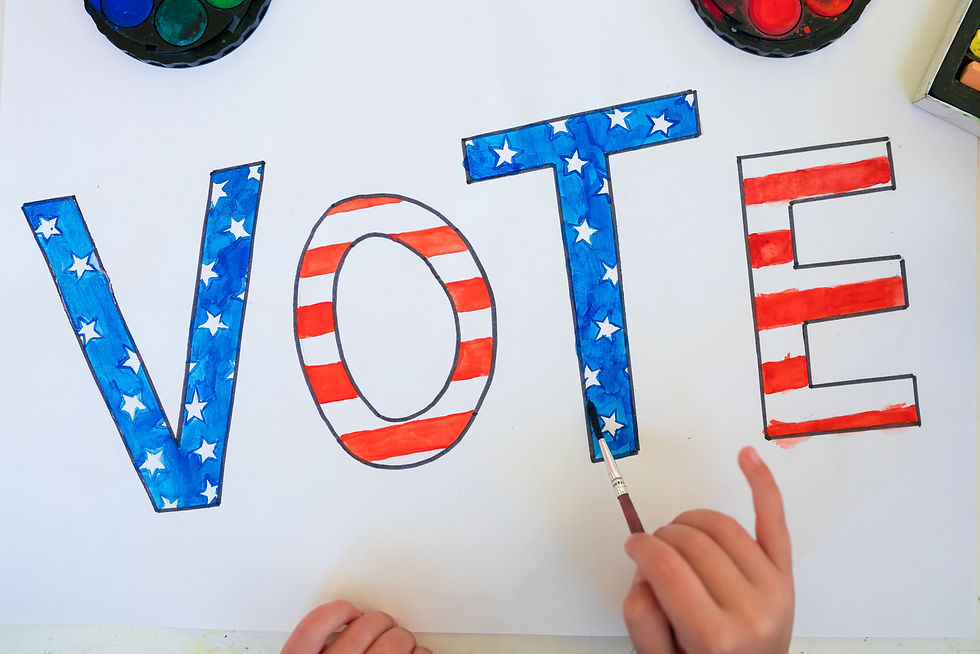
Patriotism is not a feeling you have — it is something you do. Voting is one of the most tangible acts of patriotism available to an ordinary citizen. It is the moment when a person says: I am here. I am part of this. I have a stake in what comes next. When we fail to pass that conviction on to our children, we are not just failing them — we are failing democracy.
The good news is that this is entirely within our reach. You do not need to be a civics teacher or a political scientist to raise a child who believes in the power of their voice. You need only be willing to make the conversation a regular part of family life.
What Children Need to Hear
Here is the truth we must tell them, clearly and often: democracy has never been a perfect system. It has always been a work in progress, built by imperfect people, argued over, amended, and improved through the relentless effort of citizens who refused to give up on its promise. The right to vote was not handed down fully formed — it was fought for, generation after generation, by Americans who believed that the system could be made better, and who showed up to make it so.
Our children need to understand that civic disappointment and civic engagement are not opposites. In fact, some of the most powerful voters in American history were those who were most frustrated with the status quo. Frustration, channeled rightly, is not a reason to walk away — it is a reason to show up louder.
Practical Ways to Teach Children to Have Faith in Democracy
Start early and start small. Children as young as five or six can understand the concept of fairness, of everyone getting a say. Use family decisions — where to go for dinner, which movie to watch — as living lessons in collective choice and electoral faith. Show them that when everyone's voice is counted, better decisions tend to emerge.

Bring them with you when you vote. There is no civics lesson more powerful than standing in that line together, stepping into the booth, and emerging to tell your child: we just did something that matters. The ritual of it — the simple physical act of participation — leaves a mark that lasts.
And when they express skepticism — because they will — resist the urge to dismiss it. Sit with it. Ask what they are frustrated about. Then, together, look for the stories of people who faced similar frustrations and chose engagement over withdrawal. They are not hard to find. American history is full of them.
A Nation Worth Believing In
The founders of our nation made no small bet when they decided that people, given the right tools and the freedom to use them, could govern themselves. That bet has been renewed by every generation since — not always easily, not always smoothly, but renewed nonetheless. It falls to us, now, to raise the next generation to renew it again.


